


Resources
Mar 8, 2017
Hydrogen Delivery Factsheet
Hydrogen delivery encompasses the processes and infrastructure required to transport hydrogen from production facilities to end-users. The U.S. Department of Energy (DOE) is researching various delivery methods, including pipelines, trucks, and ships, to ensure cost-effective and efficient hydrogen transportation.

Dec 5, 2016
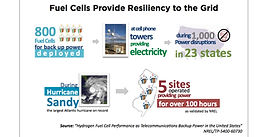
Fuel Cells Powering Critical Infrastructure in Disasters
Fuel cells offer a reliable power solution during disasters, ensuring that critical infrastructure remains operational. The U.S. Department of Energy (DOE) highlights the importance of fuel cells during emergencies, such as hurricanes, where they have powered essential facilities like hospitals, emergency response centers, and communication networks.
Apr 6, 2016
Hydrogen Production Fact Sheet
Hydrogen, a versatile and abundant element, can be produced from a variety of domestic resources using methods such as natural gas reforming, electrolysis, solar-driven reactions, and biological processes. The U.S. Department of Energy is actively supporting research to develop economical and environmentally-friendly hydrogen production technologies to meet future energy needs.
Nov 16, 2015
Fuel Cells Fact Sheet
Fuel cells are devices that convert chemical energy from fuels into electricity through a chemical reaction. The U.S. Department of Energy (DOE) is researching and developing various types of fuel cells, including Polymer Electrolyte Membrane (PEM), Direct Methanol, Alkaline, Phosphoric Acid, Molten Carbonate, and Solid Oxide.


Oct 15, 2010
Hydrogen-Powered Buses Brochure
Hydrogen-powered buses represent a clean and efficient transportation solution, with the potential to significantly reduce greenhouse gas emissions and dependence on fossil fuels. The U.S. Department of Energy (DOE) has been actively supporting the development and deployment of hydrogen-powered buses, with several demonstration projects across the country.

Dec 19, 2007
Energy Independence and Security Act of 2007
The Energy Independence and Security Act of 2007 (EISA) includes provisions to move the United States toward greater energy independence and security, increase production of clean renewable fuels, protect consumers, increase product, building, and vehicle efficiency, promote research on and deploy greenhouse gas capture and storage options, and improve the energy performance of the federal government.
